
2026 is supposed to be another “affordability” election, and despite that fact, Ohioans are still dealing with stubborn, high gas prices.
According to AAA, the average gallon of gas across the Buckeye State clocked in at $3.92 today.
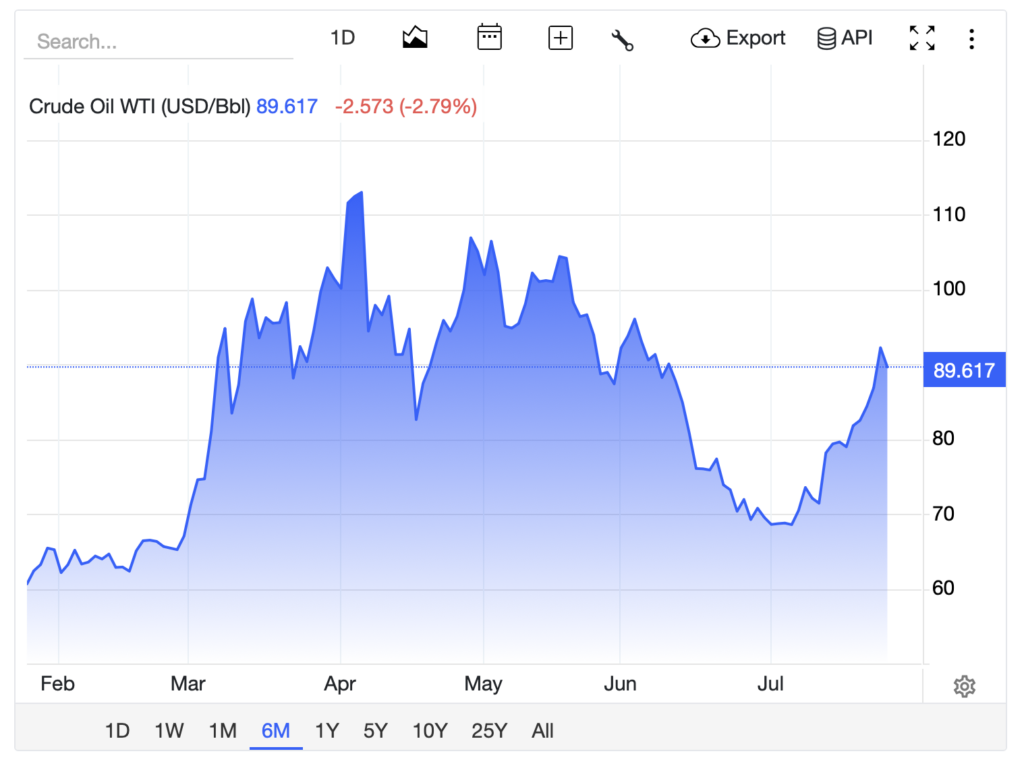
Here’s what has been going on with WTI crude oil prices over the last six months. As you can see, whatever the merits of the “military action” in Iran, the effect has been much higher oil prices overall (via Trading Economics).
So maybe it’s not surprising to see former Rep. Steve Stivers, the head honcho at the Ohio Chamber of Commerce, start calling for reform of ethanol mandates.
Here are four reforms that could lower prices at the pump without sacrificing the quality of our roads.
Reform the Renewable Fuel Standard (RFS) and Modernize the Renewable Identification Number (RIN) System
The largest opportunity to lower fuel prices is by reforming portions of the federal Renewable Fuel Standard (RFS) and the Renewable Identification Number (RIN) compliance system.
The RFS is a federal fuel program that requires refiners to blend biofuels like ethanol into gasoline. Compliance is managed using RINs, costly credits that disproportionately burden independent refiners and ultimately increase prices for consumers. In fact, RIN credit prices just hit record highs and are adding 36 to 45 cents per gallon at the pump and climbing.
The RFS system was created when Congress expected gasoline demand to continuously rise. Instead, fuel efficiency improvements slowed demand growth, creating a system that often requires more ethanol blending than infrastructure and market demand can reasonably accommodate.
This is interesting because the Ohio Chamber has generally been very pro-ethanol (this is how in the next paragraph, Stivers manages to call for allowing year-round sale of E15; theoretically, there’s nothing wrong with that, except there are still a decent number of engines out there that won’t tolerate it, and the more corn we dump into gas tanks, the less we put on the market as food for humans or farm animals, so to the extent this even nominally would save anyone money at the pump, it’ll probably be made up by, oh, I don’t know, higher meat prices, for example, further down the line).
When you have entities like the Ohio Chamber saying “OK, we agree the Renewable Fuel Standard is a hot mess that’s driving everyone’s costs up,” you know it’s time for Ohio’s Members of Congress to start asking the administration for some relief.
Though whether or not JD Vance will carry that message for the folks back home is anyone’s guess, as he continues to mount his not-so-stealthy presidential pre-campaign, diaper and burp a new baby (congrats, JD and Usha!) and shop for a new house in chi-chi Loudoun County, Virginia.
Related Stories:

The lefty conspiracy theorists have a new conspiracy theory to shop
LOL Jon Husted is such a Senate non-entity, Ohioans think Sherrod Brown is still in the job but just hasn’t been very active
With “friends” like these, who needs enemies?